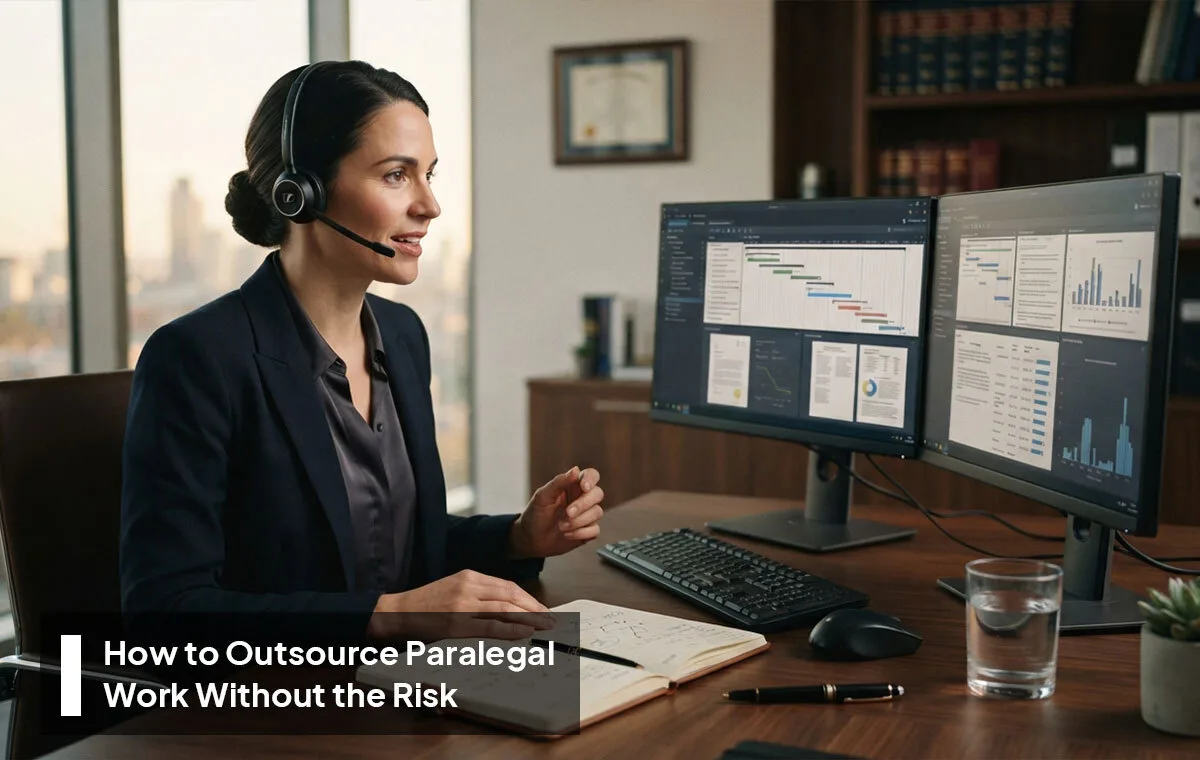
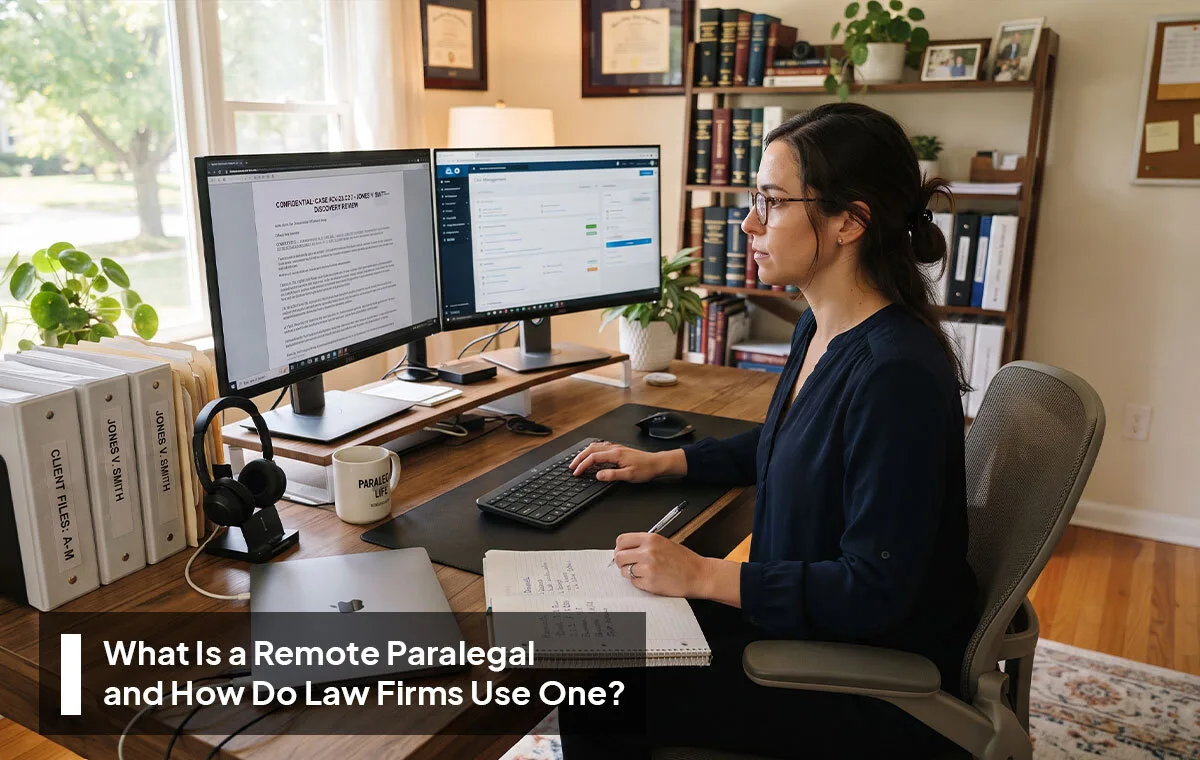
A remote paralegal is a trained legal support professional who helps attorneys with substantive legal work from outside the physical office. They may support legal research, document preparation, case file organization, discovery tracking, court filing coordination, matter updates, and attorney prep under supervision.
Here is my honest take: most small law firms do not need more “help.” They need the right kind of help.
A general assistant can answer calls, schedule meetings, and organize inboxes. That matters. But when the work starts touching case files, deadlines, drafts, discovery, exhibits, and legal research, the firm needs someone who understands the legal workflow.
That is where a remote paralegal becomes valuable.
Not because they replace an attorney. They do not.
Not because they remove supervision. They should not.
A remote paralegal helps attorneys stop doing support work that requires legal process knowledge but not attorney-level judgment. That is the real hiring decision.
What is a remote paralegal?
A remote paralegal performs paralegal work through secure digital tools, cloud-based case management software, shared documents, email, video calls, and written workflows.
The role is not “someone remote who helps a lawyer.”
It is a legal support role that should be connected to casework, matter organization, drafting support, research support, deadlines, and attorney review.
The U.S. Bureau of Labor Statistics explains that paralegals and legal assistants support lawyers by maintaining and organizing files, conducting legal research, and drafting documents.
That definition matters because it separates paralegal work from general admin work.
A remote paralegal should help legal work move forward.
Why do law firms hire remote paralegals?
Law firms hire a remote paralegal when attorneys are spending too much time on work that someone trained in legal support could handle.
This usually shows up in small, frustrating ways.
A hearing is coming up, and the file is not clean. Discovery responses are scattered. Client documents are missing. A draft needs formatting before attorney review. The attorney knows what needs to happen, but the firm does not have enough support capacity to keep it moving.
The problem is rarely one dramatic failure.
It is the slow drain of casework admin.
A remote paralegal helps reduce that drain by taking ownership of repeatable legal support work, while the attorney keeps control of legal judgment.
What can they do?
A remote paralegal can support many legal workflows, depending on the firm’s practice area, jurisdiction, tools, and supervision rules.
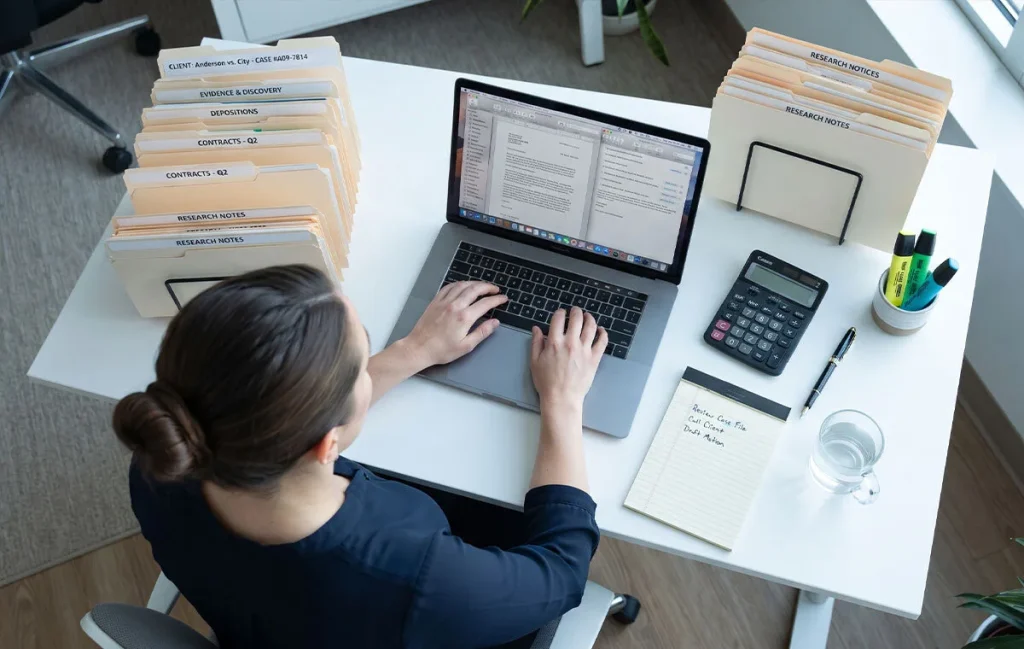
Common responsibilities may include:
- organizing matter files
- preparing first drafts from templates
- supporting legal research
- summarizing records
- tracking discovery requests
- preparing exhibit lists
- maintaining case chronologies
- collecting client documents
- reviewing files for missing items
- updating matter notes
- supporting court filing preparation
- preparing attorney review packets
- tracking deadlines
- coordinating documents across tools
BLS also lists duties such as gathering facts, researching laws and regulations, organizing legal documents, drafting correspondence and legal documents, helping lawyers during trials, and filing legal documents with courts or agencies.
That does not mean every remote paralegal should do every task.
It means the role can be much deeper than scheduling and inbox support.
What should attorneys keep?
A remote paralegal should not replace attorney judgment.
The attorney should keep control over:
- legal advice
- legal strategy
- client representation decisions
- final document review
- settlement decisions
- court appearances
- fee agreements
- legal analysis
- final filing approval
- ethics and compliance decisions
This boundary is not optional.
For U.S. firms, ABA Model Rule 5.3 on responsibilities regarding nonlawyer assistance is a useful supervision reference because it focuses on making sure nonlawyer conduct is compatible with a lawyer’s professional obligations.
That is the safest way to think about the role.
A remote paralegal can prepare, organize, draft, research, and track.
The lawyer reviews, decides, advises, and owns the legal outcome.
How is this different?
A remote paralegal is different from a virtual legal assistant because the work is more closely tied to legal process and case substance.
A virtual legal assistant may support admin-heavy work.
A remote paralegal usually supports legal-workflow-heavy work.
| Task | Better fit |
| Scheduling consultations | Virtual legal assistant |
| Managing attorney inbox | Virtual legal assistant |
| Sending appointment reminders | Virtual legal assistant |
| Organizing pleadings | Remote paralegal |
| Preparing discovery summaries | Remote paralegal |
| Drafting template-based documents | Remote paralegal |
| Supporting legal research | Remote paralegal |
| Building case chronologies | Remote paralegal |
Some small firms blend both roles, and that is fine.
But the title should match the work.
If the firm mainly needs phones, calendar, intake, and admin, do not overhire for a paralegal. If the firm needs case support, documents, deadlines, research, and matter organization, do not underhire with only general admin support.
Which firms benefit most?
A remote paralegal can help many practice areas, but the best use cases are usually document-heavy, deadline-heavy, or process-heavy.
| Practice area | How remote support can help |
| Immigration law | Forms support, document collection, case tracking |
| Family law | Discovery organization, draft prep, hearing packets |
| Personal injury | Medical records, demand packet support, case chronology |
| Litigation | Discovery tracking, exhibit prep, filing coordination |
| Estate planning | Draft packet prep, intake review, document checklists |
| Business law | Contract support, entity records, due diligence organization |
| Real estate law | Transaction checklists, closing document support |
The practice area matters.
A litigation remote paralegal may not be the best fit for an estate planning firm. An immigration-focused remote paralegal may not be right for a personal injury practice.
This is one reason I do not like generic hiring.
Law firms should hire around workflow, not just title.
What tools are needed?
Remote legal support only works when the tools are clear.
A remote paralegal may work with:
- Clio
- MyCase
- PracticePanther
- Filevine
- LawPay
- Microsoft 365
- Google Drive
- Dropbox
- DocuSign
- Adobe Acrobat
- court e-filing portals
- task management tools
- legal research tools
But tools do not fix a messy firm.
The workflow does.
Who assigns tasks? Where are deadlines tracked? Where are drafts stored? Who approves filings? How are client documents named? What information can the remote paralegal access? What should be escalated to the attorney?
A good tool without rules becomes another place where work gets lost.
What should onboarding include?
The first 30 days should not be random task dumping.
A remote paralegal needs context.
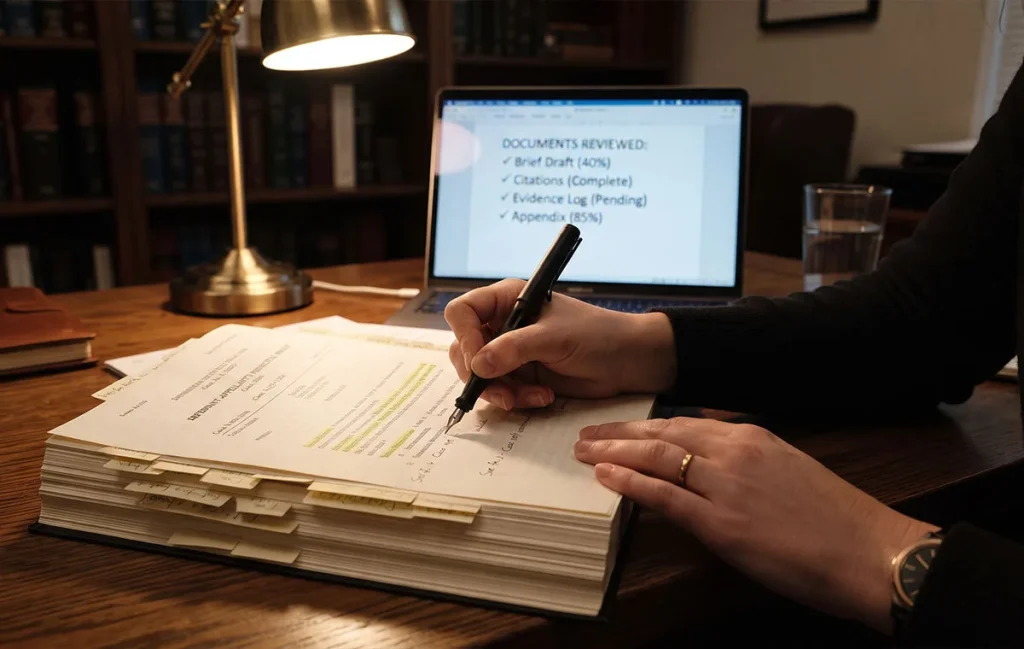
They should understand the firm’s practice areas, document standards, file naming rules, communication expectations, deadlines, templates, review process, and confidentiality expectations.
A useful onboarding plan may include:
- Approved tool access
- Sample completed files
- Document naming rules
- Matter workflow overview
- Attorney review rules
- Active case priorities
- Template library walkthrough
- Deadline tracking process
- Client communication boundaries
- Weekly feedback check-ins
This is where many firms fail.
They hire good people, then give them scattered instructions.
A remote paralegal can only work well when the firm gives them a system to work inside.
What should you delegate?
Start with legal support tasks that are repeatable, document-heavy, or time-consuming.
Good first tasks include:
- organizing matter files
- preparing case chronologies
- reviewing client document checklists
- drafting template-based documents
- summarizing records for attorney review
- tracking discovery deadlines
- preparing hearing packets
- updating matter status notes
- building exhibit lists
- collecting missing client documents
Do not delegate the riskiest work first.
Trust should build in layers.
Start with structured tasks. Review quality. Give feedback. Expand ownership once the remote paralegal understands how the firm works.
That is how the role becomes valuable without creating unnecessary risk.
What skills matter most?
A remote paralegal needs more than legal familiarity.
They need remote-work discipline.
BLS lists communication skills, detail orientation, interpersonal skills, organizational skills, and research skills as important qualities for paralegals and legal assistants. Those skills matter even more when the person is not sitting in the office.
Look for:
- Clear writing
- Legal research ability
- Document accuracy
- Deadline discipline
- Practice-area familiarity
- Comfort with legal software
- Confidentiality awareness
- Strong file organization
- Ability to ask specific questions
- Calm communication under pressure
The best remote paralegal is not the person who says yes to everything.
It is the person who catches missing details, asks smart questions, and helps the attorney see what needs attention before it becomes urgent.
How much does it cost?
Cost depends on experience, practice area, location, workload, and hiring model.
BLS reports that the median annual wage for paralegals and legal assistants was $61,010 in May 2024. BLS also reports that paralegals and legal assistants held about 376,200 jobs in 2024, with about 39,300 projected openings each year on average over the decade.
That tells us two things.
First, paralegal support is a real professional role, not basic admin.
Second, small firms may need the skill set without always needing a full-time local employee.
That is why remote hiring can make sense.
A firm can access paralegal-level support without immediately committing to a full-time in-office hire before the workload justifies it.
Will AI replace them?
No, not in the way people think.
AI can help speed up research, summarize documents, organize notes, and draft starting points. But legal support still needs judgment, review, confidentiality, fact-checking, attorney supervision, and matter context.
That is the more realistic view.
AI may change the workflow, but it does not remove the need for trained human support.
In my opinion, the strongest 2026 legal support model is not “AI instead of paralegals.”
It is “AI plus a skilled remote paralegal who knows what to check, what to question, and what to escalate.”
What can go wrong?
Remote paralegal support can fail when the firm treats the role casually.
Common mistakes include:
- unclear supervision
- vague task assignments
- no deadline system
- messy file naming
- late attorney feedback
- poor access controls
- too much client communication without rules
- expecting legal judgment from a support role
- hiring general admin for paralegal-level work
Most failures are not remote-work failures.
They are process failures.
A remote paralegal needs clear tasks, clean systems, and regular review. Without that, even a strong hire can become another source of confusion.
When should you hire?
You should consider hiring when legal support work is slowing down attorney time, client experience, or case movement.
Signs include:
- Attorneys are organizing files after hours
- Discovery deadlines feel scattered
- Drafts are always rushed
- Client documents are hard to track
- Hearings require last-minute preparation
- Case notes live in too many places
- Attorneys are doing work that does not require attorney judgment
- The firm needs legal support but not a full-time in-office hire
That last point matters.
A remote paralegal is often best for firms that need real legal support, but want a more flexible way to build capacity.
Where Anywhere Talent fits
Anywhere Talent helps firms hire vetted global professionals for legal support, admin, operations, customer support, finance, sales, marketing, and executive support.
For a remote paralegal role, the most important step is not just finding someone with legal experience.
It is defining the workflow.
Does the firm need litigation support? Immigration document coordination? Family law discovery help? Estate planning draft preparation? Case chronology work? Client document collection? Filing coordination?
Each need points to a different profile.
Anywhere Talent helps match the role to the practice area, tools, supervision style, and support level so the firm is not hiring blindly.
Final takeaway
A remote paralegal can help law firms move legal work forward without forcing every support role to be in-office.
They can organize case files, support legal research, prepare drafts, track deadlines, coordinate documents, support discovery, and help attorneys stay ahead of matter details.
But the role only works when the boundaries are clear.
The attorney still owns legal advice, legal strategy, final review, and professional responsibility. The remote paralegal supports the process so attorneys can spend less time buried in legal support work and more time practicing law.
If your firm needs paralegal-level support but is not ready for a full-time in-office hire, Anywhere Talent can help you find vetted remote legal support that fits your practice area, tools, and workflow.
Book a free consultation with Anywhere Talent to build legal support before case work starts falling behind.
FAQs
A remote paralegal is a legal support professional who helps attorneys with paralegal tasks from outside the physical office using secure tools, case management software, and written workflows.
A remote paralegal may help organize case files, support legal research, prepare drafts, track deadlines, support discovery, collect client documents, build case chronologies, and prepare attorney review packets.
No. A remote paralegal should not give legal advice, make legal strategy decisions, or replace attorney review. Legal advice and final judgment should stay with the attorney.
Yes. A virtual legal assistant usually focuses more on admin tasks, scheduling, intake, and communication support. A remote paralegal usually handles more substantive legal support under attorney supervision.
Small and growing firms often benefit when they need paralegal-level help but do not yet need a full-time in-office hire. Practice areas may include immigration, family law, litigation, personal injury, estate planning, business law, and real estate law.
Yes. Anywhere Talent helps firms find vetted global legal support professionals who can support case workflows, document organization, research support, deadline tracking, and recurring legal admin.